
Gallery
The Emperor’s Clock: FRANZ RZEBITSCHEK IN PRAG Astronomical Clock with a One-Year Power Reserve and a Unique Quarter-Striking Mechanism
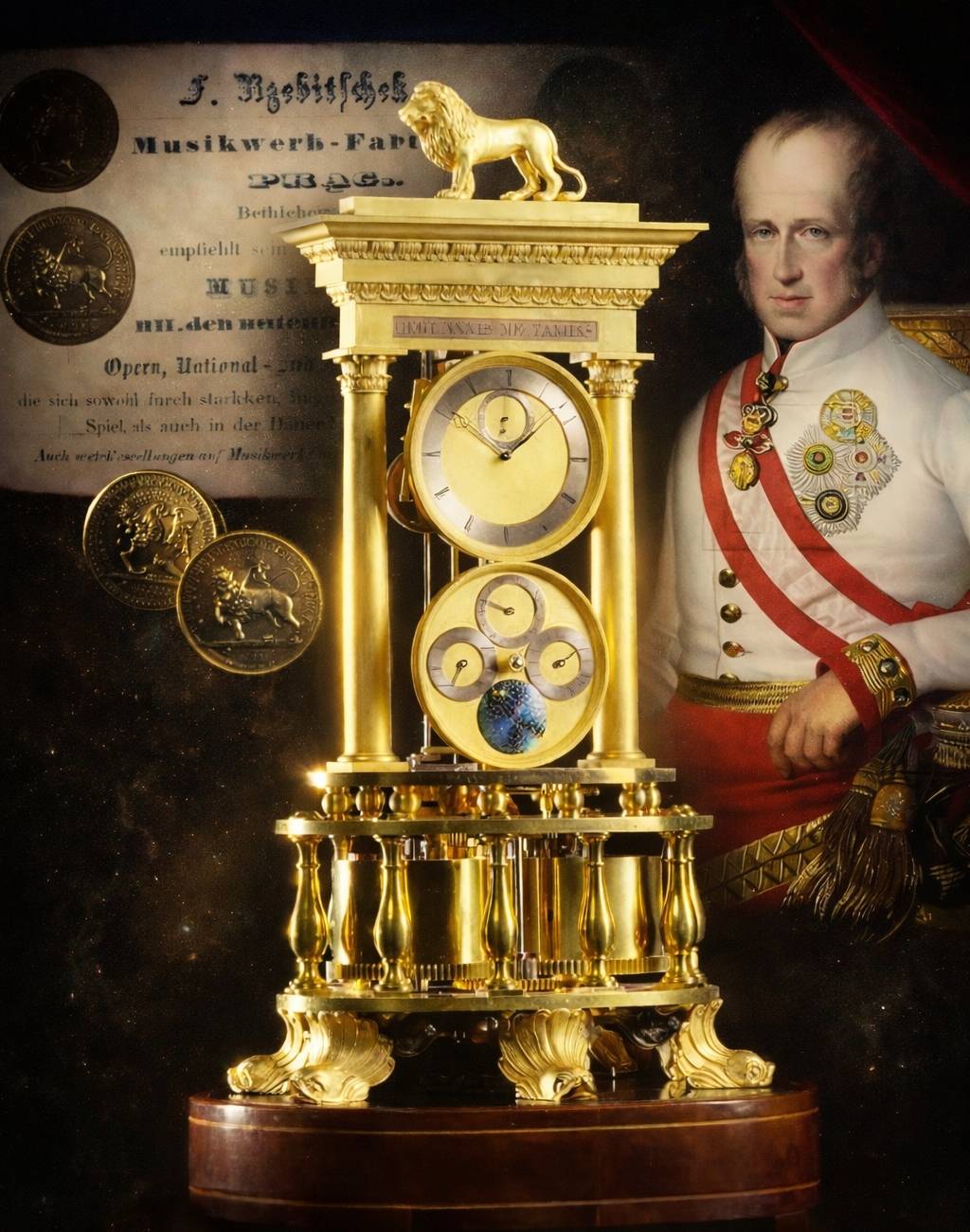
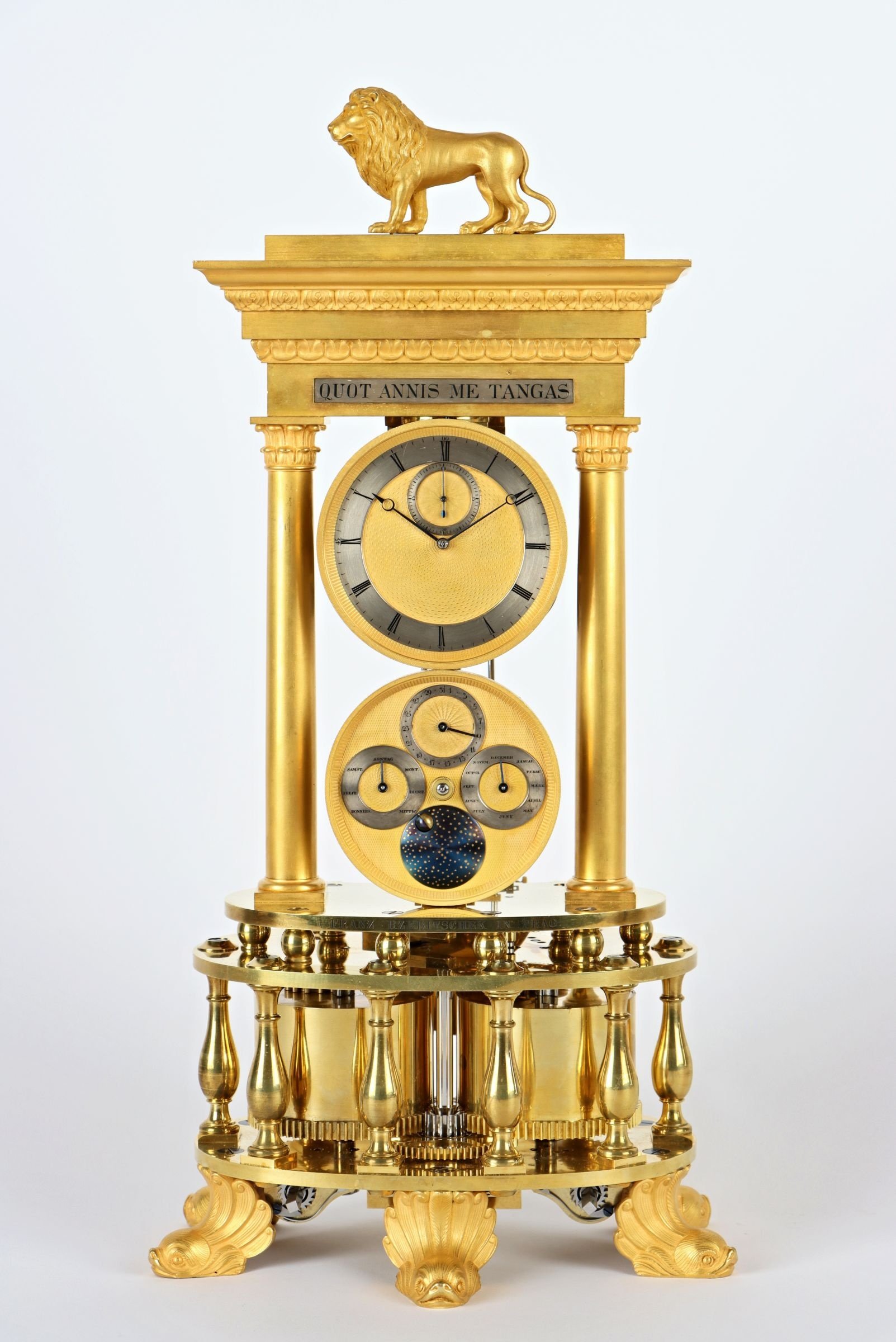
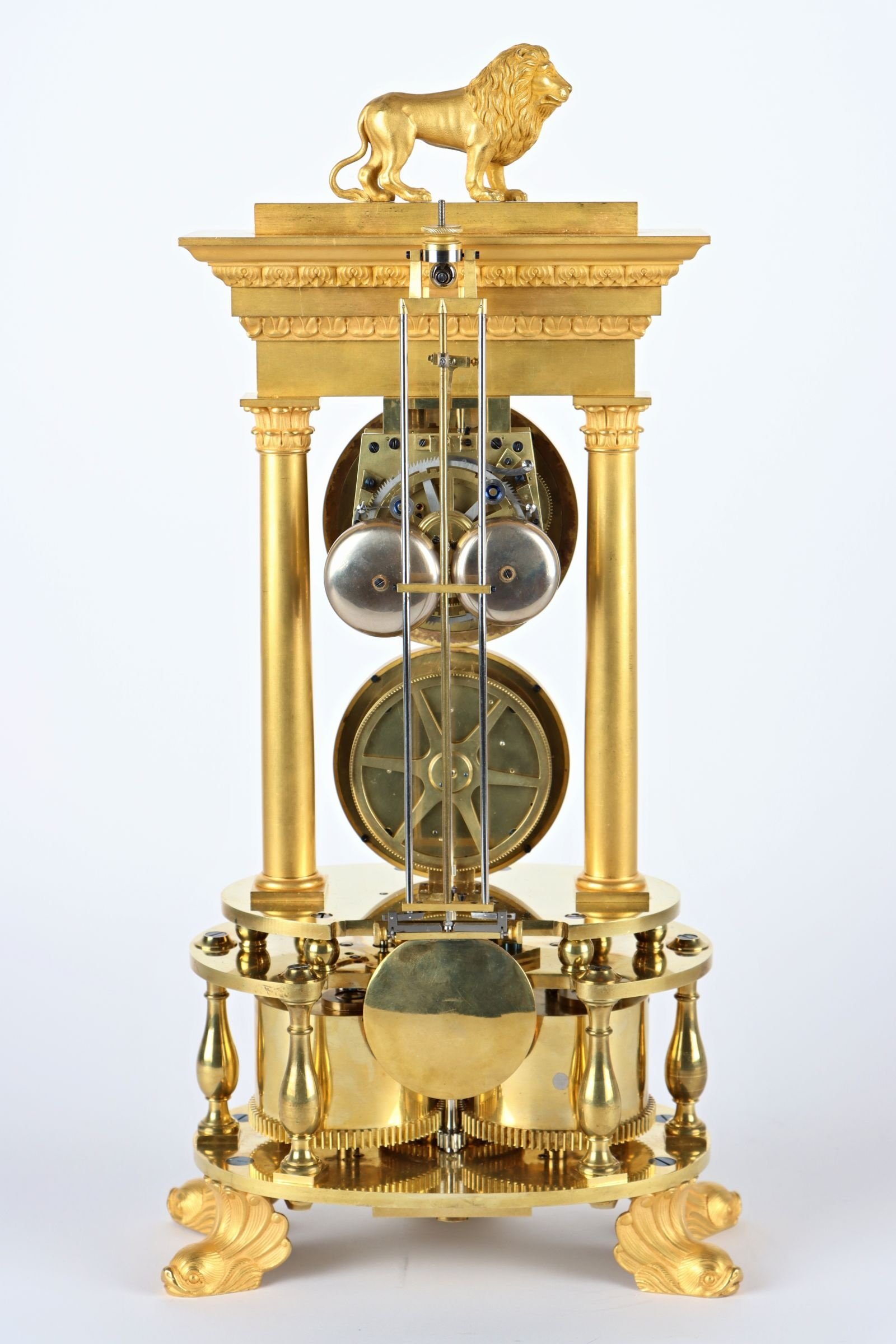
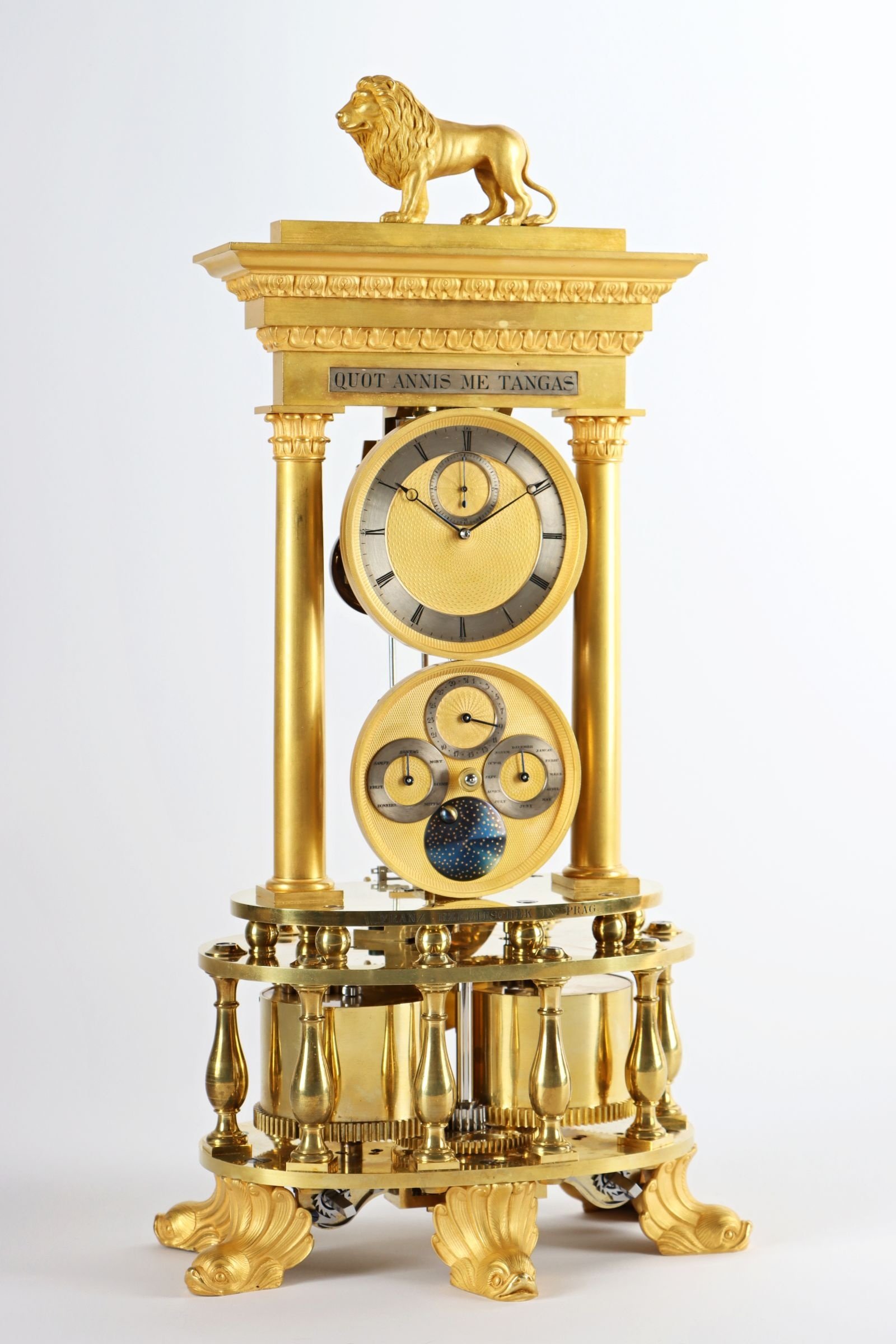
Manufacturer: Masterpiece by FRANZ RZEBITSCHEK IN PRAG
Clockmaker: Franz Rzebitschek (born November 26, 1801, in Dašice – died December 12, 1889, in Prague) was a prominent Czech clockmaker, mechanic, and maker of musical machines. In the literature, he is often referred to as František Řebíček, and in official records he appears under the name Franz Řebicžek.
Co-author – Clockmaker: Alois Willenbacher (born 1795 in Prague) was a prominent Czech mechanic, clockmaker, and co-owner of the firm Willenbacher & Rzebitschek in Prag.
Date: Turn of the 1830s and 1840s, approximately around the year 1839
Movement: Approximately 365-day power reserve, driven by two massive mainspring barrels. Features a Graham anchor escapement and a repeating quarter-striking mechanism powered by a self-winding mainspring barrel, which maintains striking functionality throughout the clock’s year-long operation. The striking mechanism sounds on two metal bells. The movement’s arbors are protected by screwed chatons set with Czech garnet endstones. It includes a gridiron compensating pendulum with a knife-edge suspension and a brass bob. The clock also features a perpetual annual calendar; the brass calendar plate is signed A. Seitz. The mechanism displays hours, minutes, seconds, day of the week, day of the month, months of the year, and lunar phase. The clock strikes the quarters every 15 minutes and, on the hour, strikes the quarters followed by the full number of hour strikes.
Dials: Delicately guilloché-gilded central zones, silvered annular chapter rings, original blued steel hands, and finely crafted, delicately guilloché bezels.
Case: Fire-gilded bronze, brass, and silvered base metal. The case is styled as a columned portico with an entablature featuring a classically profiled cornice. It is topped with a sculptural figure of a lion, and the frieze bears a silvered plaque inscribed with the Latin phrase: QUOT ANNIS ME TANGAS. The base is constructed from solid brass plates connected by turned spacer columns and is signed FRANZ RZEBITSCHEK IN PRAG. The case rests on five gilt-bronze feet stylized in the form of Empire-style dolphins.
Condition: The clock is fully functional. The case, movement, and dial have been preserved in exceptionally good condition, with only minor wear and damage consistent with the object's age and expected use over time.
Dimensions of the Clock (excluding base/case): 47 x 23,5 x 16 cm
Overall Dimensions (including base and glass dome): 65 x 30 x 20 cm
Accessories: Glass dome, oval wooden base, original wooden travel case (étui), large winding key for the two main mainspring barrels, small key for the initial winding of the selftensioning mainspring barrel located in the movement, and original handwritten documents by Franz Rzebitschek and his family.
Provenance: These clocks come directly from the family of Franz Rzebitschek and are appearing on the art market for the first time in nearly 185 years.
Exhibitions and History:
Individual clocks from the developmental series of three astronomical timepieces by Alois Willenbacher & Franz Rzebitschek were presented at the following exhibitions.
1) Prague, 1831 – Fourth Provincial Industrial Exhibition
Contemporary documents state that at this exhibition, astronomical clocks by Alois Willenbacher & Franz Rzebitschek were presented, based on both Breguet’s principles and their own mechanical design solutions. The gear train arbors were mounted in Czech garnet bearings.
2) Prague, 1836 – Sixth Provincial Industrial Exhibition
Contemporary documents state that at this exhibition, a table astronomical clock with a one-year power reserve was presented by the firm of Alois Willenbacher & Franz Rzebitschek in Prague. The expert jury unanimously recognized the clock as an exceptional work of art, noting that the makers had admirably solved the highly challenging task of keeping a clock running for over a year using only the power of a spring. The firm of Alois Willenbacher & Franz Rzebitschek was awarded a gold medal at the exhibition. Subsequently, by order of Austrian Emperor Ferdinand I, the clock was purchased for display in the Allerhöchstdessen Cabinet.
3) Vienna, 1839 – Second General Austrian Exhibition of Commercial Products (Zweite allgemeine österreichische Gewerbs-Producten-Ausstellung)
Contemporary documents state that at this exhibition, a table astronomical clock was presented which, with a single winding, remained in operation for a full year powered solely by a mainspring, and whose striking mechanism required no rewinding during that time. According to the unanimous judgment of the exhibition’s expert jury, the clock was deemed an outstanding work of art in every respect. It impressed with the innovative design of its mechanism and the precision craftsmanship evident even in the smallest components — a testament to the exceptional skill of its makers. At this exhibition, the firm was once again awarded a gold medal.
4) MAK – Austrian Museum of Applied Arts in Vienna during the 1950s. A one-year running clock by the firm Willenbacher & Rzebitschek was exhibited in the collection of the MAK.
5) Prague, 2024 - Jubilee 50th Antique Fair – Antique At this exhibition, nearly 185 years after the Vienna exhibition of 1839, this very clock was rediscovered by the public and presented as a non-sale exhibition piece. It was awarded the grand prize as the best exhibit of the fair.

A video about the clocks by Franz Rzebitschek.
Other products
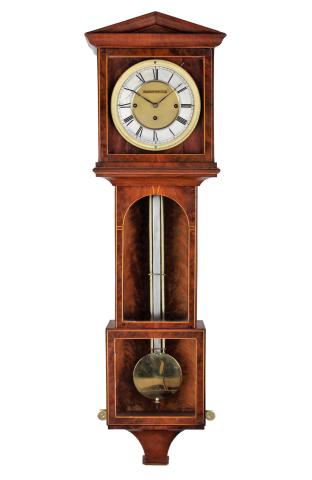
Miniature wall clock - Laterndluhr
Wall-mounted pendulum clock, so-called lantern clock, circa 1830, Vienna; dial signed I. Vlaschitz in Wn. Neustadt (Ignatz Vlaschitz in Wien Neustadt).
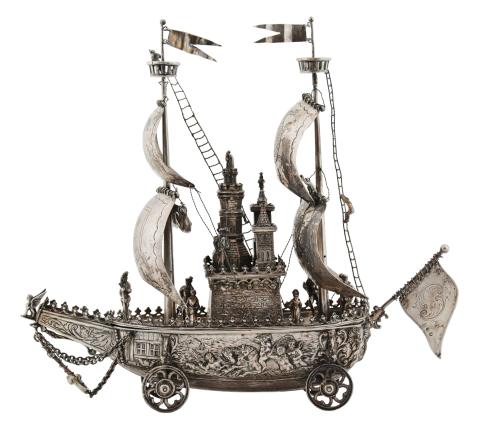
Silver model of a ship with figural decoration
Germany, Hanau, 19th century. Two-part silver model of a ship with rich figural and sculptural decoration, comprising a total of 12 figures.
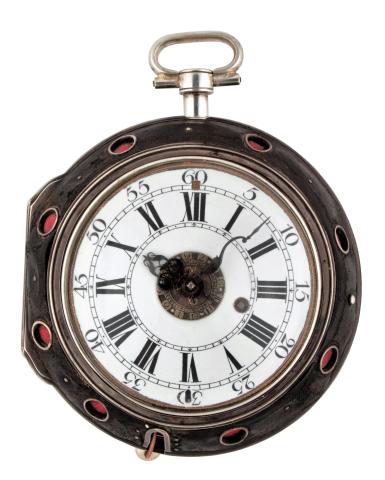
Large Baroque carriage clock – Joseph Spiegel
Germany, Friedberg, Joseph Spiegel (Joseph Miroir), circa 1740. Large double-cased traveling striking clock with date display and alarm.
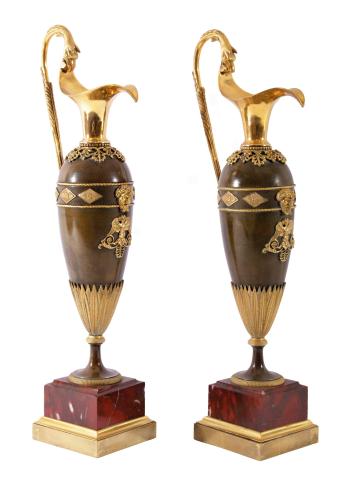
Pair of Empire teapots – Claude Galle
France, Paris, circa 1810. A luxurious pair of bronze ewers produced in the renowned workshop of Claude Galle (1759–1815).